
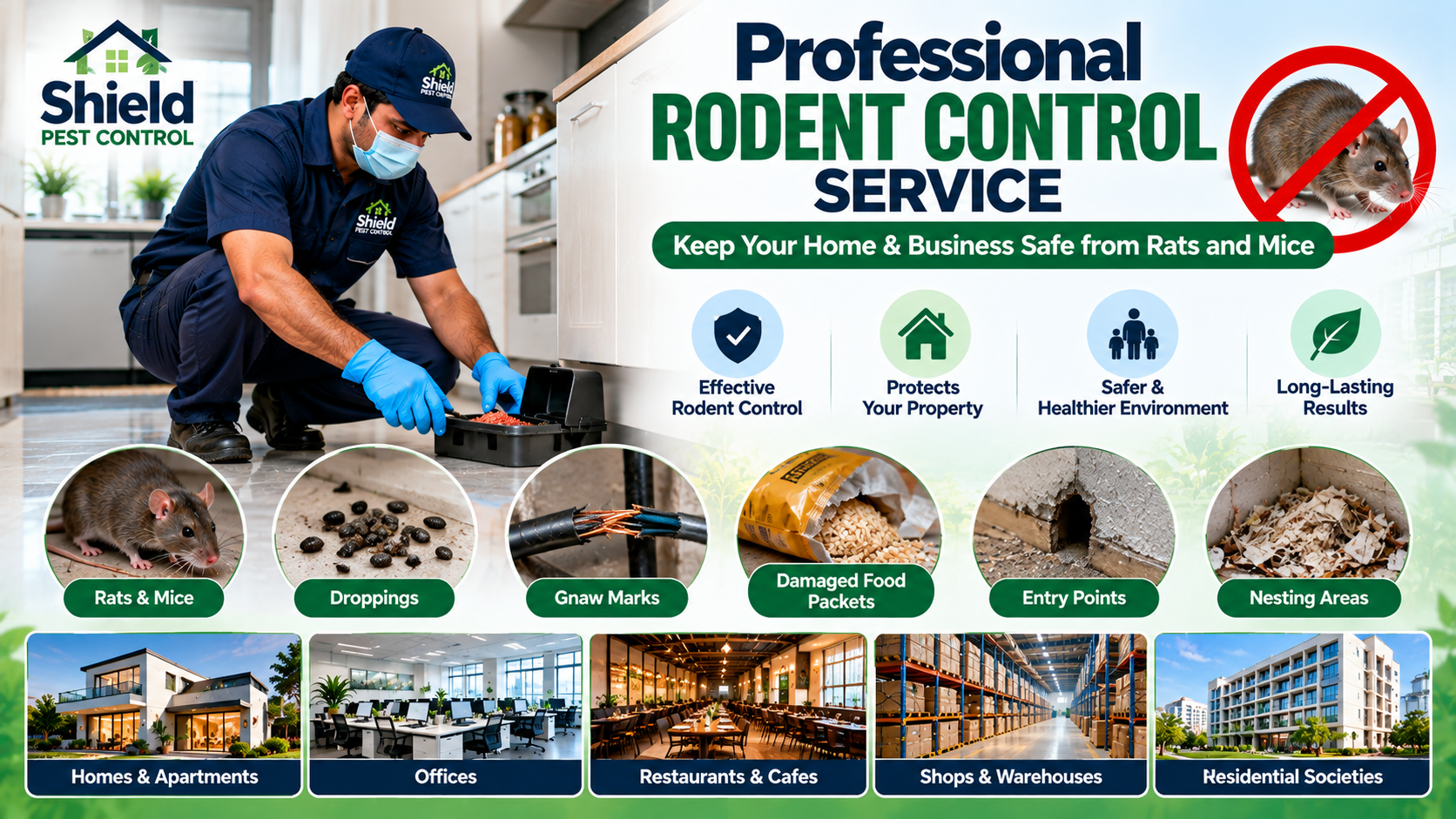
Professional Rodent Control Service By Shield Pest Control
Hearing scratching behind a wall at night, finding small droppings near the kitchen, or discovering chewed food packets can be an early warning that rodents have entered your property. Rats and mice are good at staying out of sight, and by the time they are regularly seen, they may already have established hiding or nesting areas.
Shield Pest Control provides professional rodent control services for homes, apartments, offices, shops, restaurants, warehouses and other properties. Our service focuses on understanding how rodents are entering and moving around the property, while addressing the areas where their activity has been noticed.
How to Recognize a Rodent Infestation
Rodents are mostly active when people are less likely to see them. This makes physical signs especially important.
Look for:
- Small droppings near walls or storage areas
- Gnaw marks on food packets or materials
- Scratching sounds during the night
- Damaged wires or cables
- Food containers that have been chewed
- Greasy marks along walls or frequently used paths
- Nesting material in hidden corners
- Unusual smell in cupboards or storage spaces
- Rodents disappearing into gaps, drains or false ceilings
Finding one or more of these signs does not necessarily indicate the size of the infestation. A property assessment can help identify areas requiring attention.
Why Rodents Enter Homes and Buildings
Rodents are constantly looking for food, water and sheltered places where they can remain undisturbed. Properties with accessible food storage, waste areas, clutter or structural gaps can provide suitable conditions.
Common access points include:
- Gaps beneath doors
- Holes around pipes and cables
- Drainage openings
- Broken vents
- Wall and ceiling gaps
- Openings around utility lines
- Damaged doors or windows
- Gaps between structures and service areas
Even a relatively small opening can become an access route.
Rodent Control for Kitchens and Food Areas
Kitchens, pantries and food-storage areas require particular attention because they provide easy access to food.
Rodents can damage packaging and contaminate areas while searching for food. Simply replacing damaged packets may not solve the problem if the animals continue to enter through the same route.
Good storage practices include keeping food in sealed containers, cleaning crumbs quickly, maintaining covered waste bins and avoiding unnecessary food storage on the floor.
Professional rodent control can then address the infestation according to the conditions found at the property.
Rodent Control for Offices and Commercial Properties
Rodents can cause problems in more than residential buildings. Offices, restaurants, shops, warehouses, factories and storage facilities may also experience rodent activity.
Commercial properties can have additional attractants such as:
- Food waste
- Packaging materials
- Large storage areas
- Loading zones
- Waste collection points
- Hidden service ducts
- Storage rooms
- Outdoor vegetation
For businesses, rodent management should consider both the areas where activity is visible and the possible routes used by rodents to move through the property.
More Than Removing the Rodent
Successful rodent management involves more than dealing with the animal that has been spotted.
A useful control strategy considers three things:
Where are rodents entering?
Where are they finding food or water?
Where are they hiding or moving?
Addressing these conditions can help reduce the possibility of repeated activity.
Depending on the property and infestation, professional rodent management may involve suitable control measures, inspection of potential entry points and recommendations for improving sanitation and exclusion.
Protect Your Property From Rodent Damage
Rodents can gnaw on a variety of materials, including packaging, insulation and electrical wiring. This is one reason repeated rodent activity should not be ignored.
Regularly inspect less-used parts of the property, particularly storerooms, kitchens, utility areas, garages, false ceilings and spaces behind large appliances.
Keep cartons organized and avoid allowing unused materials to accumulate in dark corners.
Rodent Control for Homes and Apartments
Residential properties can develop rodent problems through kitchens, balconies, utility shafts, drains, garages and storage areas. In apartment buildings, rodents may also move through shared service routes and common waste areas.
Shield Pest Control provides rodent control for homes and apartments, with the treatment approach based on the property layout and signs of activity.
Rodent Control Services in Delhi NCR
Shield Pest Control provides rodent control in Delhi NCR, including Noida, Greater Noida, Ghaziabad, Delhi and nearby areas, subject to service availability.
Whether you have discovered droppings in your kitchen, heard movement inside a ceiling or found evidence of gnawing in a storeroom, professional inspection can help determine the next step.
Found Signs of Rats or Mice?
Don't ignore repeated scratching sounds, droppings or damaged food packaging. Contact Shield Pest Control to discuss your rodent problem and arrange an appropriate service for your property.
Frequently Asked Questions
How do I know if I have rats or mice?
Droppings, gnaw marks, scratching noises, damaged food packets, nesting material and unusual odours can all indicate rodent activity.
Can rodents enter through small gaps?
Yes. Rodents can use surprisingly small openings around doors, pipes, drains, cables and other structural points.
Is rodent control suitable for restaurants and warehouses?
Yes. Commercial properties such as restaurants, shops, warehouses and offices can require dedicated rodent management.
Will removing visible food solve the problem?
Removing accessible food can reduce attraction, but it may not address rodents that are already nesting or using established entry routes.
How can I help prevent rodents from returning?
Keep food sealed, manage waste properly, reduce clutter, repair structural gaps and inspect areas around pipes, doors, drains and utility openings.