
Scratching sounds above your bedroom, unusual smells or damaged wiring could indicate rats in your false ceiling. Learn how to recognise a rodent infestation, what to avoid and when to call a professional pest-control service.
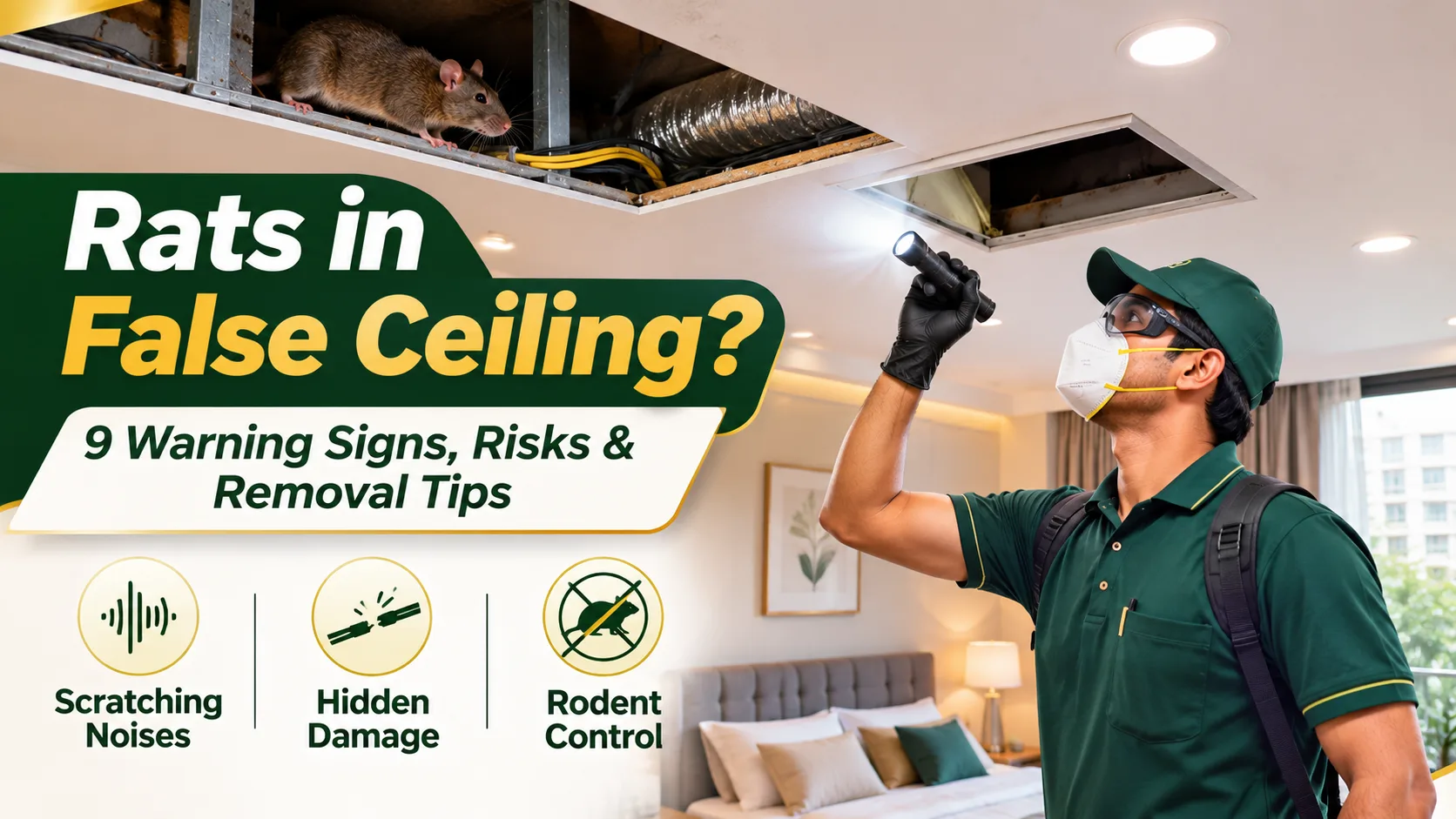
Rats in False Ceiling? 9 Warning Signs, Risks & How to Get Rid of Them
You're lying in bed when you hear something moving above the ceiling. First, there's a faint scratching sound. A few minutes later, it sounds like something is running from one corner of the room to another.
You switch on the lights, check the room and find nothing.
If this happens repeatedly, especially at night, you may have rats in your false ceiling.
False ceilings are common in modern apartments, independent houses, offices and commercial properties. They help conceal wiring, lighting and air-conditioning systems, but the space above them can also provide shelter for rodents.
The problem is that rats can remain hidden for weeks while damaging materials, contaminating concealed areas and moving through connected building spaces.
In this guide, we'll explain how to identify a possible infestation, what risks to watch for and how professional rodent control can help.
Can Rats Live Inside a False Ceiling?
Yes. Rats can enter the space above a false ceiling through accessible gaps, service ducts, damaged openings and other routes connected to the building.
A false ceiling may provide several conditions that rodents seek:
Dark, concealed spaces with limited human activity.
Access to electrical wiring and service pipes.
Potential nesting materials.
Routes connecting different rooms or floors.
Nearby food and water sources elsewhere in the building.
In apartments, rodents may move through utility shafts, plumbing passages and shared service areas.
In independent houses, roof openings, exterior pipe penetrations and damaged vents can also provide access.
However, scratching sounds alone do not prove that rats are present. Other animals or building-related noises may sound similar.
A proper inspection helps identify the actual source.
9 Warning Signs of Rats in Your False Ceiling
1. Scratching or Running Sounds at Night
One of the most common complaints is hearing scratching, scurrying or movement above the ceiling after dark.
Rats are often active at night, so sounds may become more noticeable when the house is quiet.
You might hear movement near light fixtures, air-conditioning ducts or the edges of the ceiling.
Repeated sounds from similar locations deserve investigation.
2. Small Droppings Around Access Points
Rodent droppings may appear near ceiling access panels, cupboards, storage areas or utility openings.
Rat droppings are generally larger than mouse droppings, but appearance varies by species and age.
Avoid handling droppings directly.
Do not dry-sweep or vacuum suspected rodent waste because this can disturb contaminated particles.
3. Unpleasant Smell From the Ceiling
A persistent musty or unpleasant odour may develop where rodents nest or leave urine and droppings.
A stronger smell could also indicate a dead animal, although other building problems can cause similar odours.
If the smell appears to come from a concealed ceiling cavity, professional inspection may be needed.
4. Damaged Electrical Wires
Rats gnaw on different materials, including insulation around electrical cables.
This can create electrical faults and, in some circumstances, increase fire risk.
Warning signs may include unexplained electrical interruptions, damaged cable insulation discovered during maintenance or unusual burning smells.
If you suspect electrical damage, contact a qualified electrician. Do not open electrical fixtures or investigate live wiring yourself.
5. Chewed Ceiling Materials
Look for gnaw marks around accessible openings, damaged insulation or disturbed ceiling materials.
Rodents may enlarge existing gaps to move between concealed areas.
Damage around ceiling access panels or service penetrations can provide clues about their movement.
6. Nesting Materials Above the Ceiling
Rats may use paper, insulation, fabric and other soft materials for nesting.
Maintenance workers may discover shredded materials or concentrated debris in ceiling cavities.
Do not reach into concealed areas without understanding the potential electrical and contamination hazards.
7. Repeated Movement Near AC Ducts
Air-conditioning installations often require openings for pipes, drains and electrical connections.
Poorly sealed penetrations can become possible rodent entry routes.
If noises repeatedly occur around AC units or service ducts, these areas should be included in the inspection.
8. Rats Appearing in the Kitchen or Store Room
Sometimes the first visible sign is a rat entering the kitchen, pantry or storage room.
If the same property also has movement above the false ceiling, there may be a connected travel route.
Food storage areas are especially important because they can provide accessible food sources.
9. Sounds Returning After Temporary Control
If noises disappear briefly after a trap is placed but return later, the underlying entry route or infestation may not have been fully addressed.
Removing one rodent does not necessarily resolve a larger problem.
Persistent activity requires a more complete assessment.
Are Rats in a False Ceiling Dangerous?
Rats in concealed ceiling spaces can create several problems.
Electrical Damage and Fire Risk
Rodents may chew wiring insulation, potentially exposing conductors.
Electrical faults can be serious, particularly where damaged wiring is hidden above a ceiling.
Contamination
Rodent urine, droppings and nesting materials may contaminate surfaces and concealed spaces.
Disturbing contaminated material during cleaning or maintenance can create additional exposure risks.
Damage to Insulation and Building Materials
Rodents can damage insulation, flexible materials and certain building components.
Repairs may become more complicated when affected materials are difficult to access.
Recurring Infestation
If entry points remain open and food sources are available, rodents may continue entering even after individual animals are removed.
The solution needs to address both the rodents and the conditions that allow them inside.
How to Get Rid of Rats in a False Ceiling
The right approach depends on the species, number of rodents, building layout and accessibility of the affected area.
Step 1: Confirm Rodent Activity
Begin by identifying where noises occur and whether there are other signs such as droppings, gnaw marks or damaged materials.
A technician may inspect accessible ceiling openings, utility shafts, storage areas and external entry points.
Avoid cutting open the ceiling without first considering hidden wiring, plumbing and other services.
Step 2: Identify Entry and Exit Routes
Possible access points include:
Gaps around AC piping.
Unsealed plumbing penetrations.
Damaged ventilation openings.
Exterior wall gaps.
Service shafts.
Openings around roof structures.
Damaged access panels.
The goal is to understand how rodents are entering and travelling through the building.
Step 3: Use Suitable Rodent-Control Methods
Professional treatment may involve traps, monitoring devices, exclusion measures or carefully controlled baiting where appropriate.
The selected method should account for children, pets, food areas and access restrictions.
Do not scatter loose rodent poison inside a false ceiling.
Improper poison placement can create risks for people and animals. Rodents may also die in inaccessible locations, causing odour and removal difficulties.
Step 4: Remove Rodents and Address Contamination
Trapped rodents should be handled and disposed of appropriately.
Where contamination is present, cleaning should follow suitable safety precautions.
Rodent waste should not be swept or vacuumed dry.
For extensive contamination or inaccessible areas, professional cleanup may be necessary.
Step 5: Seal Entry Points
After assessing rodent activity and ensuring animals will not be trapped inside, suitable entry points should be sealed.
Materials must be appropriate for the opening and building conditions.
Simply covering a hole with a weak material may not prevent future gnawing.
Step 6: Monitor for Further Activity
Follow-up monitoring helps determine whether rodents remain active.
Continued noises, new droppings or additional gnaw marks may indicate that further action is required.
For recurring infestations, professional rodent control services can help assess the property and plan suitable measures.
Can You Remove Rats From a False Ceiling Without Breaking It?
Sometimes.
If the ceiling has suitable access panels, a technician may be able to inspect and place appropriate control devices without removing large sections.
However, accessibility varies.
Some properties may require limited access work to inspect damaged wiring, remove dead rodents or clean contaminated materials.
Avoid unnecessary demolition before an inspection.
Why Do Rats Keep Coming Back After Treatment?
Recurring rodent activity usually means one or more contributing conditions remain.
Common reasons include:
Unsealed entry points: Rodents can continue entering through accessible openings.
Food sources: Open waste bins, exposed food and poorly maintained storage areas can attract rodents.
Nearby nesting locations: Rodents may remain active in adjoining spaces.
Incomplete monitoring: Removing one visible animal may not address the full infestation.
Shared building infrastructure: In apartments and commercial buildings, service shafts and connected utility spaces can allow movement between units.
Effective control therefore involves more than placing a trap.
How to Prevent Rats From Entering Your False Ceiling
Prevention begins with building maintenance and reducing rodent access.
Seal Gaps Around Pipes and AC Lines
Inspect accessible penetrations and arrange suitable sealing where necessary.
Maintain Waste Disposal Areas
Use covered bins, remove food waste regularly and keep surrounding areas clean.
Store Food Properly
Keep grains, packaged foods and pet food in secure containers.
Inspect Utility Shafts
Property managers should check service spaces for damaged openings and rodent activity.
Repair Damaged Vents
Ventilation openings may require appropriate rodent-resistant screening that does not obstruct required airflow.
Schedule Inspections When Activity Recurs
Repeated sightings or noises may justify periodic monitoring, particularly in larger buildings.
These prevention measures align with integrated pest-management principles, which focus on removing food, water, shelter and access opportunities rather than relying only on pesticides.
Rats in False Ceilings in Apartments and High-Rise Buildings
False-ceiling rodent problems can be particularly frustrating in apartment buildings.
A resident may hear scratching above the bedroom even when there are no obvious openings inside the flat.
The reason may be that rodents are moving through shared service routes or entering from another part of the building.
In these situations, treating only one apartment may not be sufficient.
Building management may need to inspect common areas, service shafts, waste rooms and external openings.
Coordinated action can help reduce repeated movement between connected spaces.
Rodent Control for Offices and Commercial Properties
Commercial buildings often have extensive false ceilings containing electrical cables, networking infrastructure, AC ducts and fire-safety equipment.
Rodent activity in these areas can create maintenance problems and operational disruption.
Offices, coaching institutes, retail stores and warehouses may benefit from scheduled inspections where recurring activity is identified.
Shield Pest Control provides commercial pest control services for properties requiring professional pest-management support.
The treatment plan should consider operating hours, electrical safety, staff access and any necessary follow-up.
How Much Does Rat Control in a False Ceiling Cost?
The cost depends on the property and the work required.
Important factors include:
Size and layout of the affected ceiling.
Number of suspected entry points.
Severity of rodent activity.
Accessibility of ceiling cavities.
Type of control method.
Number of visits required.
Exclusion and cleanup work, if included.
A small residential property may need a different approach from a multi-floor office building.
Request a quotation that explains the treatment scope and any additional charges.
Professional Rat Control in Noida, Greater Noida West and Ghaziabad
Rodent problems can occur in apartments, independent houses, offices and commercial buildings throughout Noida, Greater Noida West and Ghaziabad.
False ceilings, utility shafts and concealed service areas may require particular attention because the source of activity is not always visible.
Shield Pest Control helps customers assess rodent activity and discuss appropriate control options.
Our services can include inspection-based recommendations, suitable rodent-management methods and preventive guidance according to the property's requirements.
For other common pest problems, explore our general pest control services.
Frequently Asked Questions
What does a rat in the false ceiling sound like?
You may hear scratching, running, gnawing or movement, particularly at night. However, noises alone cannot confirm a rat infestation.
Can rats damage POP false ceilings?
Yes. Rats can damage certain ceiling materials, insulation and components in concealed spaces. The extent depends on the construction and activity.
Can rats enter through AC pipes?
Rats may use accessible gaps around AC pipe penetrations and service openings. Proper sealing can help reduce entry opportunities.
Will rats leave the false ceiling on their own?
They may move elsewhere, but waiting is not a reliable control strategy. If food, shelter and access remain available, activity can continue.
Can I put rat poison above the false ceiling?
Avoid placing loose poison in inaccessible ceiling cavities. Incorrect use can create exposure hazards and dead animals may become difficult to retrieve. Seek professional advice on suitable control methods.
How long does it take to remove rats from a false ceiling?
It depends on the infestation, access points, control method and follow-up requirements. Some problems can be addressed relatively quickly, while recurring infestations need additional work.
Is rat activity in a false ceiling an emergency?
Seek prompt assistance if there are signs of damaged electrical wiring, a burning smell or significant contamination. Electrical hazards should be assessed by a qualified electrician.
Can rats return after professional treatment?
Yes, especially when entry points, food sources or connected nesting areas remain available. Exclusion and monitoring are important parts of prevention.
Final Thoughts
Hearing rats above your ceiling can be unsettling, but the most useful response is to identify the problem before it becomes more difficult to manage.
Scratching sounds, droppings, gnaw marks and repeated activity are all reasons to investigate.
Professional rodent management focuses on locating activity, selecting suitable control methods and reducing the conditions that allow rats to return.
Need Help With Rats in Your False Ceiling?
Shield Pest Control provides rodent-control services for homes, apartments, offices and commercial properties in Noida, Greater Noida West, Ghaziabad and surrounding service areas.
Call / WhatsApp: +91 8595223441
Email: ankur@pestscontrolservices.in
Website: https://www.pestscontrolservices.in/
Contact Shield Pest Control to discuss your rodent problem and request a treatment quotation.