
Worried about pest-control chemicals around your baby, children or pets? Discover how professional pest treatments work, what safety precautions matter, when to return home and how to prepare your property for treatment.
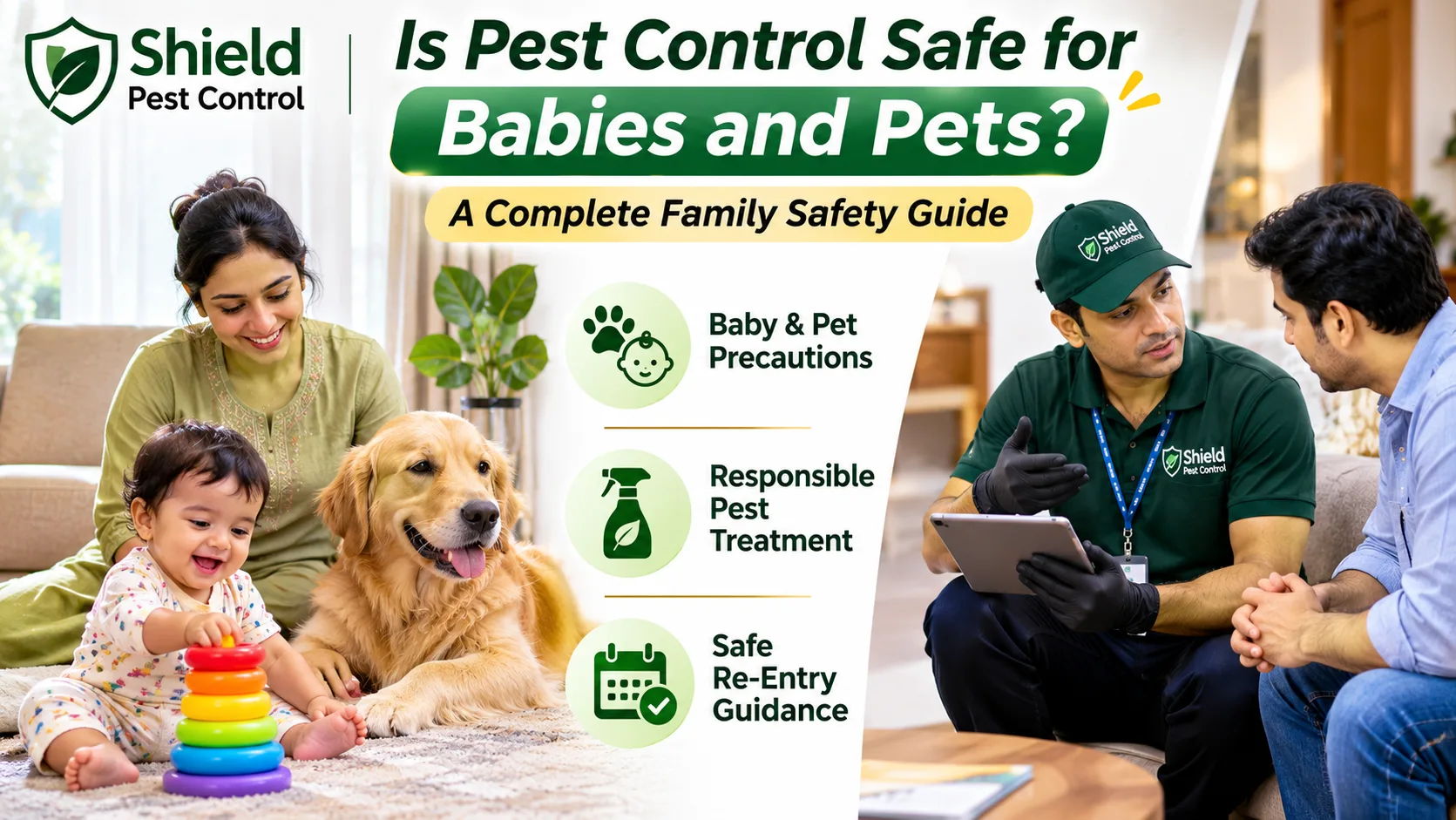
Is Pest Control Safe for Babies and Pets? A Complete Safety Guide
Your baby has just started crawling, your dog loves exploring every corner of the house, and you've noticed cockroaches appearing in the kitchen at night.
You want to get rid of the pests, but there's another concern: Is pest control safe for babies and pets?
It's a question every parent and pet owner should ask before scheduling treatment.
Professional pest control can be carried out with precautions that help reduce exposure risks. However, no pesticide treatment should be described as completely harmless. Safety depends on the product, application method, exposure, property conditions and whether the required precautions are followed.
The good news is that modern pest management isn't always about spraying chemicals throughout the house. Depending on the infestation, professionals may use targeted gel baits, traps, monitoring devices, exclusion methods and other treatments that limit unnecessary pesticide exposure.
In this guide, we'll explain how to prepare your home, what to ask your technician and when your family can safely return after treatment.
Is Professional Pest Control Safe for Babies and Pets?
Professional pest control can be suitable for homes with babies and pets when appropriate treatment methods are selected and all product-label safety instructions are followed.
However, there is no single safety rule that applies to every treatment.
A gel bait placed in an inaccessible cabinet cavity has different exposure considerations from a liquid spray applied to an open floor. Termite treatment beneath a building also differs from mosquito spraying around outdoor areas.
The important factors include:
The pesticide's active ingredient and formulation
The quantity and location of application
Whether babies or pets can access treated surfaces
Required ventilation and re-entry restrictions
The treatment technician's instructions
The health and behaviour of household occupants
Babies and young children need particular consideration because they frequently crawl, touch floors and put their hands or objects into their mouths.
Pets may lick surfaces, chew treated objects or investigate areas that adults rarely touch.
That's why treatment planning should begin with a conversation about who lives in the property.
Why Babies and Pets Need Extra Protection During Pest Control
Babies, toddlers and pets can experience pesticide exposure differently from adults.
Babies and Young Children
Young children spend more time close to the floor and may come into contact with residues on accessible surfaces.
Hand-to-mouth behaviour can increase the chance of accidentally ingesting contaminants.
Children may also be less able to recognise or avoid potentially hazardous products.
For these reasons, treatment areas, toys, bedding and frequently touched surfaces require careful consideration.
Dogs and Cats
Dogs may sniff, lick or chew items around the house. Cats may groom their fur after walking across treated surfaces.
Certain pesticide ingredients can be particularly hazardous to cats, and products suitable for one animal species are not necessarily safe for another.
Pets must not be allowed to access pesticides, bait stations or treated areas contrary to product instructions.
Birds, Fish and Small Animals
Birds, fish and some small animals can be especially sensitive to particular chemical exposures.
Aquariums and bird enclosures require specific precautions because airborne droplets, contaminated water or residues may create risks.
Tell the technician about every animal in your home, including fish, birds, rabbits and other small pets.
Are Odourless and Eco-Friendly Pest Control Chemicals Safe?
Many homeowners prefer odourless pest-control services because they don't want strong chemical smells inside their homes.
Low-odour formulations can improve comfort, but odourless does not mean non-toxic.
A pesticide can have little noticeable smell and still require precautions.
Similarly, the term eco-friendly does not establish that a product is safe for babies, pets or immediate occupancy.
Safety must be evaluated using the actual product, its approved uses, label directions and potential exposure.
Before treatment, ask your pest-control provider:
What product will be used?
Where will it be applied?
Is it appropriate for the intended indoor or outdoor location?
Should children and pets leave the property?
When can they return?
Which surfaces must be avoided or cleaned afterward?
A responsible technician should explain these requirements before beginning the service.
Which Pest Control Methods May Reduce Exposure?
Different pest problems require different solutions.
Some methods can help limit unnecessary chemical application when used correctly.
1. Cockroach Gel Bait Treatment
Gel baits are commonly used for certain cockroach infestations.
They can be applied in small amounts at appropriate locations, such as inaccessible cracks and concealed harbourage areas, according to product directions.
This may reduce the need for widespread spraying.
However, gel bait must never be placed where children or pets can touch or ingest it.
Professional cockroach control services should consider both infestation severity and household safety requirements.
2. Rodent Traps and Secure Bait Stations
Rodent management may involve exclusion, sanitation, monitoring and traps.
Where rodenticides are necessary, they must be used in accordance with the product label and kept inaccessible to children and non-target animals.
Secure stations reduce certain access risks but do not eliminate every hazard.
Rodent carcasses and poisoned prey can also present risks to pets, so the treatment plan should address inspection and removal.
3. Targeted Ant Control
Ant-control programmes may use monitoring, exclusion, sanitation and suitable bait formulations.
Baits should be placed only in approved locations that cannot be accessed by children or pets.
Spraying every visible ant is not always the best approach because some species require colony-focused management.
4. Termite Treatment
Termite treatment may involve soil applications, wood treatments or bait systems.
These methods have different safety requirements.
Some treatments may require restricted access to specific rooms or outdoor areas until application and re-entry conditions are satisfied.
For homes with babies or pets, discuss the proposed application areas before booking professional termite control.
5. Non-Chemical Pest Prevention
Not every pest problem requires immediate pesticide application.
Sealing entry points, repairing leaks, improving food storage, installing screens and removing breeding sources can reduce pest activity.
These measures are valuable components of integrated pest management and can help minimise unnecessary pesticide use.
What to Do Before Pest Control If You Have a Baby
Preparation is one of the most important parts of a safer pest-control service.
Inform the Technician
Tell the service provider that a baby or young child lives in the property.
Mention crawling areas, play mats, feeding locations and any special exposure concerns.
Put Away Toys and Baby Items
Remove toys, pacifiers, bottles, feeding utensils and other baby products from areas where treatment will occur.
Store them in closed cabinets or another untreated location, as advised.
Protect Food and Feeding Surfaces
Keep baby food, formula, utensils and food-contact items protected from treatment.
If food-contact surfaces could be affected, ask which cleaning steps are required before reuse.
Arrange a Suitable Place to Stay
If the treatment requires occupants to leave, arrange for your baby to stay elsewhere for the full restricted period.
Do not assume that moving into another room is sufficient.
Follow the Re-Entry Instructions
Return only after the product-specific requirements have been satisfied.
A strong smell is not a reliable indicator of whether an area is safe to re-enter.
How to Prepare Your Pets for Pest Control Treatment
Pets should be included in the treatment plan from the beginning.
Before treatment:
Inform the technician about the number and type of pets.
Remove food bowls, toys and bedding from treatment areas as instructed.
Keep pets away from equipment, pesticide containers and application areas.
Arrange temporary accommodation when required.
Ask about precautions for aquariums, birds and small animals.
Confirm the re-entry conditions before allowing pets back.
For dogs and cats, make sure they cannot reach treated cracks, bait placements or pesticide residues.
For aquariums, do not assume that simply covering the tank is sufficient. The technician should provide product-specific instructions, which may include relocating the tank or taking additional precautions.
How Long Should Babies and Pets Stay Away After Pest Control?
There is no universal waiting period that applies to all pest-control treatments.
Some applications may have specific re-entry restrictions, while others require treated surfaces to dry, adequate ventilation or additional precautions.
The appropriate time depends on the product label and treatment method.
Treatment typeRe-entry considerationsTargeted gel baitAccess restrictions depend on placement and product instructionsIndoor liquid sprayMay require treated surfaces to dry and other label-specific conditionsTermite treatmentRestrictions depend on treatment areas, formulation and applicationMosquito treatmentOutdoor access may be restricted until label requirements are metRodent controlBaits and traps must remain inaccessible to children and pets throughout useNever rely on a generic two-hour, four-hour or twenty-four-hour rule. Ask for the exact re-entry instructions applicable to your treatment.
If the technician cannot provide clear safety guidance, request clarification before the application begins.
What Should You Do After Pest Control?
Once the required re-entry conditions have been met, a few practical steps can help maintain a safer home.
Follow Ventilation Instructions
Open windows or use ventilation where directed by the treatment provider and product label.
Do not assume ventilation alone makes an area safe before the required re-entry conditions are satisfied.
Clean the Right Surfaces
Food preparation counters, feeding areas and other surfaces may require cleaning if exposure occurred or the technician directs it.
Avoid immediately washing away treatment from designated cracks or other locations where residual activity is intended.
Ask which areas should be cleaned and which should remain undisturbed.
Check Baby Play Areas
Before allowing your baby to crawl or play, confirm that the area is permitted for use and that all required cleaning or drying conditions have been met.
Keep Pets Away From Baits
Do not move, open or disturb bait stations.
If a bait appears damaged or accessible to a pet, contact the service provider.
Watch for Unusual Symptoms
If someone develops symptoms after possible pesticide exposure, move away from the source and seek medical advice promptly.
If a pet may have ingested pesticide or develops unusual symptoms, contact a veterinarian immediately.
Keep the pesticide product name or label information available for the healthcare professional.
Can You Stay at Home During Pest Control?
It depends on the treatment.
Some targeted methods may allow parts of a property to remain occupied when the product instructions and application conditions permit it.
Other treatments require occupants to leave the treated area or building temporarily.
A professional should explain whether you need to vacate the property, which rooms are affected and when normal activities may resume.
For families with babies and pets, avoiding unnecessary exposure should take priority over convenience.
Is DIY Pest Control Safer Than Professional Treatment?
Not necessarily.
Household sprays and pest-control products can still cause exposure if used incorrectly.
Common mistakes include applying too much pesticide, using outdoor products indoors, mixing chemicals, spraying near food or leaving bait within reach of children.
Some people assume that a product labelled natural is automatically safe. That isn't a reliable conclusion either.
Professional treatment offers the advantage of an inspection-based approach and trained application, provided the service provider uses appropriate products and follows applicable requirements.
For persistent infestations, consider professional residential pest control services rather than repeatedly applying household pesticides without understanding the source.
Pest Control for Families Living in Noida and Greater Noida West
Families living in apartments and independent houses may face recurring problems involving cockroaches, ants, mosquitoes, rodents and termites.
In high-rise communities, shared plumbing, waste-management areas and utility openings can sometimes contribute to pest movement.
A suitable pest-management plan should consider the building's conditions as well as the people and animals living inside.
Shield Pest Control provides residential pest-management services in Noida, Greater Noida West, Ghaziabad and surrounding areas.
Our approach is to assess the pest problem and discuss appropriate treatment options, including practical precautions for households with children and pets.
Questions to Ask Your Pest Control Company Before Booking
Before confirming an appointment, ask the following:
Which pest species are you treating?
What chemical or treatment method will be used?
Can the treatment be targeted to reduce unnecessary exposure?
What precautions are needed for babies and pets?
Must the property be vacated?
What are the exact re-entry conditions?
Will the technician explain cleaning and ventilation requirements?
Can you provide the product name and relevant safety information?
What should we do if someone accidentally contacts the treatment?
Will follow-up visits be needed?
Clear answers help homeowners make informed decisions.
Frequently Asked Questions
Is pest control safe for a newborn baby?
A newborn should not be exposed unnecessarily to pesticides. Inform the technician before treatment, follow all product-specific precautions and keep the baby away from treated areas until re-entry requirements have been met. Consult a healthcare professional if you have concerns about a particular exposure.
Is cockroach gel treatment safe around babies?
Cockroach gel bait can reduce the need for widespread spraying in some situations, but it contains pesticide and must be placed where babies cannot access it. Safety depends on the product and application.
Can pest control harm dogs or cats?
Yes, pesticides can harm pets if they are exposed to hazardous amounts or access products inappropriately. Certain ingredients are especially dangerous to particular animal species. Follow veterinary and product-specific safety guidance.
Is odourless pest control safe for children?
Odourless does not mean harmless. The chemical's safety requirements remain important even when there is no noticeable smell.
Should I remove my baby's toys before pest control?
Yes, toys and feeding items should generally be protected or removed from treatment areas according to the technician's preparation instructions.
Can pets return after pest-control spray dries?
Some product labels require surfaces to dry before pets return, but other restrictions may also apply. Follow the exact product-specific instructions rather than relying on drying alone.
Is herbal pest control completely safe?
No. Plant-derived substances can also cause irritation, toxicity or allergic reactions. Their suitability depends on the ingredients, application and exposure.
What if my pet licks a treated surface?
Prevent further exposure and contact a veterinarian promptly for advice. Provide the product name, active ingredient and any available label information. Do not induce vomiting unless specifically directed by a veterinarian.
Choose Pest Control That Considers Your Family's Needs
Living with pests can be uncomfortable, but protecting your family during treatment is equally important.
The best pest-management approach doesn't simply focus on killing visible insects. It considers the infestation, the property, the occupants and the precautions required.
For families with babies and pets, choosing an appropriate treatment method and following safety instructions can help reduce avoidable exposure.
Shield Pest Control provides pest-control services for homes, apartments and commercial properties in Noida, Greater Noida West, Ghaziabad and nearby areas.
If you're concerned about pest treatment around children or pets, tell our team about your household requirements before booking.
Call / WhatsApp: +91 8595223441
Email: ankur@pestscontrolservices.in
Website: https://www.pestscontrolservices.in/
Contact Shield Pest Control to discuss suitable pest-control options and the precautions required for your home.