
Learn how to stop termites from damaging your home and prevent them from returning. This guide explains professional termite treatment, chemical barriers, moisture control, wooden furniture protection and long-term termite prevention for homes in Noida, Greater Noida West and Ghaziabad.
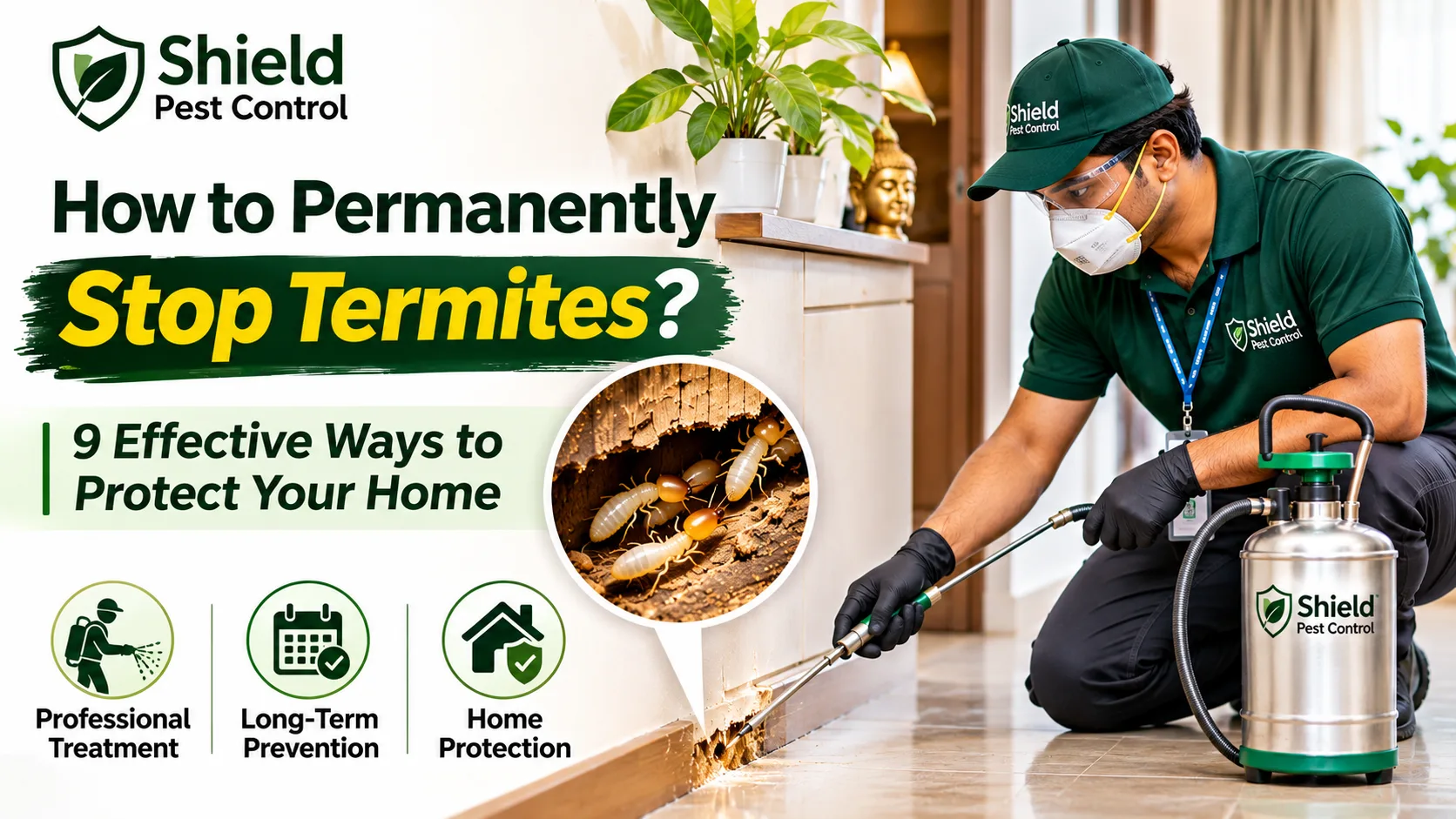
How to Permanently Stop Termites? 9 Effective Ways to Protect Your Home
You notice a thin mud line running along the wall near your bedroom door. A few days later, the wooden frame sounds hollow when you knock on it. You clean the affected area, spray an insect killer and hope the problem is gone.
But what if the termites are still active behind the wall?
This is one of the biggest challenges with termite infestations. The damage you can see is often only a small part of what's happening inside the property.
If you're wondering how to permanently stop termites, the most effective approach is to eliminate active infestations, address the conditions that attract termites and establish suitable long-term protection.
However, there's an important distinction: no termite treatment can guarantee that termites will never return. Professional treatment and preventive maintenance can significantly reduce the risk of future infestations.
Let's understand what actually works, which methods provide long-term protection and what homeowners should avoid.
Can Termites Be Removed Permanently?
An existing termite colony can sometimes be eliminated through an appropriate treatment programme. However, preventing every future termite infestation is a different challenge.
Termites live in soil, underground colonies, wooden structures and other concealed environments. New colonies may eventually approach a property even after successful treatment.
For this reason, permanent termite prevention is better understood as a long-term protection strategy rather than a one-time guarantee.
A reliable approach combines:
Professional termite inspection
Appropriate chemical or bait-based treatment
Protection of vulnerable entry points
Moisture and leakage control
Removal of favourable termite conditions
Regular monitoring and preventive maintenance
The treatment method should depend on the termite species, infestation location and construction of the building.
9 Effective Ways to Stop Termites and Prevent Them from Returning
1. Get a Professional Termite Inspection
The first step is identifying the type and extent of termite activity.
Many homeowners assume that termites are limited to the wooden surface where damage is visible. In reality, subterranean termites may enter through soil, concealed cracks and gaps around plumbing.
A professional inspection can help identify mud tubes, damaged wood, moisture problems and likely entry points.
The technician can then determine whether targeted treatment, a structural barrier or another method is appropriate.
Shield Pest Control provides professional termite control services for residential and commercial properties.
2. Use Professional Anti-Termite Chemical Treatment
Professional chemical treatment is one of the established methods used to manage subterranean termite infestations.
Depending on the building and infestation, treatment may involve applying an appropriately registered termiticide to soil or other approved treatment locations.
In existing buildings, technicians may need to create suitable access points to treat soil beneath or around affected areas.
Some termiticides are designed to create a treated zone that reduces termite movement into a structure.
Others may work through different modes of action.
The treatment must follow the product label, approved application method and applicable safety requirements.
Important: Chemical barriers are not automatically permanent. Their effectiveness can change with time, soil conditions, water movement and disturbance of treated areas.
3. Consider Termite Baiting Where Appropriate
Termite baiting systems can be useful for certain subterranean termite infestations.
These systems use monitoring stations and suitable bait formulations designed to affect termite colonies.
Baiting generally requires ongoing monitoring and maintenance rather than a single application.
Its suitability depends on the termite species, building conditions and treatment objectives.
A qualified pest-control professional can assess whether baiting, liquid treatment or a combination of methods is appropriate.
4. Repair Water Leaks and Moisture Problems
Moisture is an important factor in many termite infestations.
Leaking pipes, damp walls, poorly maintained drainage and water accumulation around foundations can create favourable conditions for termite activity.
Inspect areas such as:
Kitchen sink cabinets
Bathroom plumbing
Air-conditioning drainage points
Balconies and external walls
Basement and ground-floor areas
Water pipes passing through walls
Repair leaks promptly and address persistent dampness.
Moisture control alone will not eliminate an established termite colony, but it can make the property less favourable to future infestations.
5. Protect Wooden Furniture and Door Frames
Wooden furniture, cupboards, door frames and fixed cabinets are common locations where homeowners first notice termite damage.
Warning signs include hollow-sounding wood, blistered surfaces, mud deposits and unexplained deterioration.
If termites are suspected inside furniture, avoid simply painting over the damaged surface or covering it with laminate.
Doing so may conceal activity without resolving the infestation.
A technician should assess whether the item can be treated effectively or requires repair or replacement.
Appropriate wood treatments may help protect susceptible materials, but their effectiveness depends on the product, coverage and termite species.
6. Seal Suitable Entry Points
Subterranean termites can enter through narrow construction gaps, cracks and openings around utility connections.
Sealing accessible openings can reduce entry opportunities.
Pay attention to gaps around:
Plumbing penetrations
Wall and floor joints
Utility openings
Door frames
Foundation connections
Damaged exterior surfaces
However, sealing alone is not a substitute for termite treatment.
Termites may find alternative concealed routes, so entry-point management should be part of a broader prevention programme.
7. Avoid Direct Wood-to-Soil Contact
Wood that touches damp soil can create favourable conditions for termite activity.
Where practical, avoid storing wooden boards, discarded furniture, cardboard and construction debris directly against the foundation.
Keep firewood and other wooden materials away from exterior walls.
Inspect wooden garden structures, fencing and storage areas periodically.
Reducing accessible food sources near a building may help lower the risk of termite activity.
8. Use Pre-Construction Termite Protection for New Buildings
If you're constructing a new house, termite prevention should begin before the building is completed.
Pre-construction anti-termite treatment may involve treating designated soil areas during foundation and construction stages, using methods appropriate to the project.
This can help reduce the risk of subterranean termites entering the completed structure.
However, correct application, site preparation and protection of treated areas are essential.
Homeowners planning new construction can enquire about pre-construction pest control services.
9. Schedule Regular Inspections After Treatment
Even successful termite treatment should be followed by periodic monitoring.
Regular inspections can help identify new activity, moisture problems and changes that might affect previously treated areas.
An inspection is particularly important after major renovations, excavation, plumbing repairs or persistent water leakage.
If your termite treatment includes a written warranty, follow the inspection and reporting requirements stated in the agreement.
Which Termite Treatment Method Provides Long-Term Protection?
Different methods serve different purposes.
Treatment MethodMain PurposeImportant ConsiderationLiquid soil treatmentEstablish a treated zone against subterranean termitesRequires correct application and may lose effectiveness over timeTermite baitingSuppress or eliminate targeted coloniesRequires monitoring and maintenanceTargeted wood treatmentTreat susceptible or infested wooden areasMay not address an underground colonyPre-construction treatmentReduce termite entry risk during building constructionDepends on correct installation and maintaining treated zonesMoisture and entry-point managementReduce conditions favouring termitesSupports treatment but does not eliminate active colonies by itselfThere is no single method that works best for every property.
The most suitable treatment depends on the termite species, building design, infestation severity and site accessibility.
Why Do Termites Return After Treatment?
Finding termites again after treatment does not always mean that the original treatment was completely ineffective.
Several factors may contribute to renewed activity.
Incomplete treatment coverage: Some areas may have been inaccessible or excluded from the original treatment.
New termite colonies: A different colony may enter the property through an untreated route.
Disturbed chemical barriers: Renovation, drilling, excavation or plumbing work may disrupt previously treated zones.
Persistent moisture: Leaks and damp conditions may continue to support termite activity.
Incorrect treatment method: A treatment that does not address the actual termite species or infestation source may provide limited results.
If termite activity returns, request an inspection rather than repeatedly applying household insecticides.
Can Home Remedies Permanently Kill Termites?
Home remedies such as vinegar, salt, essential oils and household sprays are frequently promoted online.
However, there is insufficient reliable evidence that these methods can eliminate an established structural termite colony.
Some products may affect individual exposed insects without reaching the colony responsible for the infestation.
Using household chemicals in concealed spaces can also create unnecessary exposure risks or damage building materials.
For active termite infestations, professional assessment and suitable treatment are more reliable than unverified DIY remedies.
How to Stop Termites in Apartments and High-Rise Buildings
Termite activity in apartments can be difficult to investigate because the source may not be limited to one flat.
Concealed utility connections, shared structural areas and moisture problems may require coordination with building management.
If you notice termites in your kitchen cabinets, wooden doors or wardrobes, document the affected areas and request an inspection.
Avoid disturbing mud tubes before the technician has examined them, as they can provide useful evidence of termite movement.
For apartments in Noida and Greater Noida West, treatment should account for the building's structure, access limitations and affected areas.
Shield Pest Control also provides residential pest control services for common household pest problems.
Termite Prevention in Noida, Greater Noida West and Ghaziabad
Residential buildings across these areas vary considerably, from independent houses to large apartment communities.
Ground-floor properties, homes with garden areas, buildings with moisture problems and properties containing extensive wooden fittings may require particular attention to termite risks.
However, termites can also affect upper-floor apartments.
Homeowners should not assume that living above ground level eliminates the possibility of infestation.
Shield Pest Control serves customers in Noida, Greater Noida West, Indirapuram, Ghaziabad and surrounding locations.
Our team can discuss the reported signs of termite activity and recommend an appropriate assessment.
How Much Does Long-Term Termite Treatment Cost?
Termite treatment prices depend on the size of the affected property, treatment method, chemical, accessibility and warranty conditions.
A small localised treatment may cost less than a comprehensive soil-barrier programme.
However, comparing quotations solely on price can be misleading.
Before choosing a company, ask what the quotation includes:
Inspection and treatment scope
Chemical or treatment system
Areas covered and excluded
Number of scheduled visits
Preparation and safety instructions
Warranty period and conditions
Follow-up or corrective treatment provisions
For a detailed explanation of pricing, refer to our termite-treatment cost guide or request a quotation based on your property.
Frequently Asked Questions
What kills termites permanently?
A suitable professional treatment programme may eliminate an existing termite colony. However, no chemical or method guarantees that new termite colonies will never infest the property.
What is the best way to stop termites from coming back?
Combine professional treatment with moisture control, suitable entry-point management, removal of wood-to-soil contact and regular inspections.
Can termites return after chemical treatment?
Yes. Reinfestation can occur through untreated areas, new colonies or disturbed treatment zones. The risk depends on the property and treatment conditions.
How long does anti-termite treatment last?
Treatment longevity varies by chemical, application method, environmental conditions and disturbance of treated areas. Follow the service provider's written treatment and warranty documentation.
Can termites be removed without drilling?
Some termite problems may be treated using methods that do not require drilling. However, drilling may be necessary for certain post-construction soil treatments. The decision depends on the infestation and building conditions.
Does painting wooden furniture stop termites?
No. Painting may conceal visible damage but does not reliably eliminate termites already inside wood or connected to an underground colony.
Can termites damage concrete houses?
Termites do not normally consume sound concrete, but they can move through cracks, joints and openings to reach wooden materials inside concrete buildings.
Is termite treatment safe for occupied homes?
Safety depends on the product and application method. Occupants must follow preparation, ventilation, access restrictions and re-entry instructions. Children, pets and food-contact areas require particular attention.
Protect Your Home with Professional Termite Control
Termites rarely disappear simply because the visible insects have been removed.
Long-term protection begins with understanding the infestation, choosing an appropriate treatment and addressing conditions that allow termites to survive.
If you're noticing mud tubes, damaged wooden furniture or recurring termite activity, it's worth arranging a professional assessment before the damage progresses.
Shield Pest Control provides termite-control services for apartments, independent houses and commercial properties in Noida, Greater Noida West, Ghaziabad and nearby service areas.
Call / WhatsApp: +91 8595223441
Email: ankur@pestscontrolservices.in
Website: https://www.pestscontrolservices.in/
Contact Shield Pest Control to discuss a suitable termite-treatment and prevention plan for your property.